
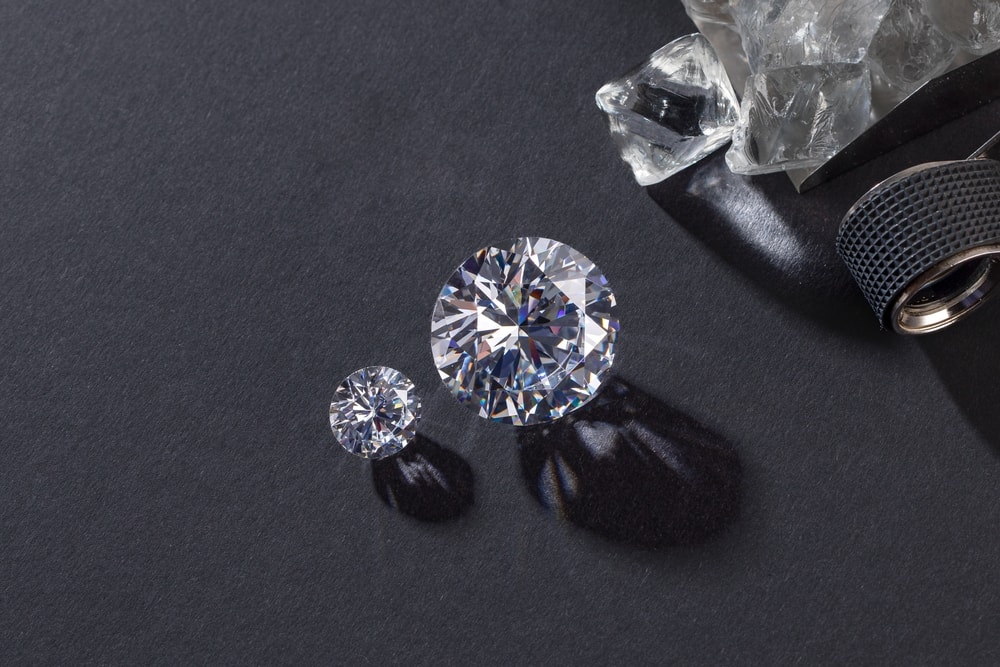
When couples start their engagement ring journey, they often wonder, “Are lab grown diamonds real?” The answer may surprise you.
More and more people are searching for budget-friendly, transparent ring options, which is why lab grown diamonds have become a major part of the conversation. Still, many individuals are confused about how these diamonds compare to natural diamonds.
It’s critical to understand your options so you can choose a diamond ring you love and feel confident about. In this guide, we’ll walk you through what lab grown diamonds are, how they compare to mined diamonds, why some buyers hesitate, and how to decide which stone is the right fit for your story.
What are Lab-Grown Diamonds? - Definition and Basics
A lab grown diamond is created in a controlled laboratory rather than underground. Instead of being formed over billions of years through heat and pressure from the earth, they’re grown through highly advanced technology that replicates those same natural conditions.
How Lab-Grown Diamonds Compare to Natural Diamonds
Chemically and physically, a lab grown diamond is the same as a natural diamond. Both are made of crystallized carbon and have the same hardness and optical properties.
A real diamond, regardless of where it comes from, has:
- A pure carbon crystal structure
- A hardness of 10 on the Mohs scale
- Bright light performance and sparkle
- Measurable cut, clarity, color, and carat weight
A lab created diamond meets all of the requirements that a natural diamond does. The only difference lies in its origin and price
How Lab-Grown Diamonds Are Made
Lab-grown diamonds are made using one of two distinct methods: HPHT or CVD:
1. HPHT (High Pressure High Temperature)
This method uses extreme heat and pressure to mimic how a mined diamond forms deep in the earth. Carbon is placed in a special press and exposed to high temperatures and intense pressure. Over time, it grows into a rough diamond crystal. This diamond can then be cut and polished just like any natural diamond.
2. CVD (Chemical Vapor Deposition)
A CVD diamond grows in a sealed chamber, where carbon-rich gas is heated until carbon atoms break apart and settle onto a tiny diamond seed. Layer by layer, a new diamond forms. CVD diamonds are known for their clarity and consistency.
Both methods create real diamonds - not look-alikes or imitation stones. They are not cubic zirconia or moissanite. They are true diamonds with the same qualities as mined diamonds.
Certified Quality and the 4 Cs
Recognized labs, like the Gemological Institute of America (GIA) and the International Gemological Institute (IGI), grade lab grown diamonds the same way they grade natural diamonds. Cut, clarity, and carat weight all play a role in a diamond’s final value and physical appearance.
Are Lab-Grown Diamonds “Real”? What Experts and Labs Say
The Gemological Institute of America, the world’s most widely respected diamond authority, states that “they [lab-grown diamonds] have essentially the same chemical composition and crystal structure as diamonds created by nature.” IGI and other grading labs have come to the same conclusion.
Both of these organizations evaluate and grade grown diamonds using the exact same equipment and criteria used for natural diamonds.
Durability and Hardness
A lab diamond ranks 10 on the Mohs hardness scale, the highest possible level. This is the same hardness as a mined diamond. Because of this, both diamond types are resistant to scratching, hold up well to everyday wear, and retain their durability and appearance for generations with proper care.
Brilliance and Sparkle in Everyday Wear
Even up close, lab grown diamonds and natural diamonds are indistinguishable. When cut well, both shine with bright fire and brilliance. Their sparkle doesn’t come from their origin - it comes from physics. Light interacts with the crystal structure in the same way, which means the performance is identical.
Even trained jewelers can’t tell the difference without advanced lab equipment specifically designed to detect growth patterns.
Why Some Buyers Still Hesitate - Common Concerns and Realities
Despite the science and gemological support behind them, lab-grown diamonds still raise questions. These concerns are understandable and worth exploring openly.
The Main Concern: Will Lab-Grown Diamonds Hold Their Value?
Lab grown diamonds don’t typically hold resale value the same way natural diamonds can. Since they can be produced more easily and on a larger scale than natural diamonds, the market supply is larger. This affects long-term pricing and trade-in potential.
Natural diamonds, on the other hand, are rare. Their supply is limited by geology and mining. Some people place a high value on this rarity, especially when purchasing an heirloom piece. If resale value is important to you, this is something to seriously consider.
The Biggest Misconception: Lab-Grown Diamonds Are “Fake” or “Cheap”
Some people confuse the term “lab grown” or “synthetic” with “inferior” or “fake.” In reality, these terms describe how the diamond was made. The stone itself is real.
A lab created diamond is far from inferior. It’s not glass or crystal, and it’s not a substitute stone. It is a real diamond; it was just produced through a different process.
Where the True Difference Lies
The only difference between a mined diamond and a grown diamond is its origin - not quality or performance. One forms naturally through geological forces and the other is grown in a lab through advanced technology. Both produce a genuine diamond.
Still, some buyers feel emotionally connected to the idea of a natural diamond formed over billions of years. Others don’t value rarity or tradition to as high of a degree. These are personal preferences; they don’t speak to quality.
Benefits of Lab-Grown Diamonds - Why Some Couples Choose Them
Today’s couples have more choices than ever, and many are drawn to the advantages of lab grown diamonds.
Better Value for Money
Many diamond shoppers choose lab grown diamonds because of their affordable cost. Given that they don’t require extensive mining or long supply chains, synthetic diamonds usually cost less than mined diamonds of the same size and quality.
For example, a 2-carat lab grown diamond ring may cost thousands of dollars less than its natural counterpart.
More Options Within Budget
Because lab diamonds give you more diamond for the price, you can explore different shapes, cuts, and styles that would have taken you over budget. Whether you want a classic round cut, an elegant oval cut, or a modern emerald cut, you can often upgrade your lab diamond’s size or quality without overspending.
What La Bijouterie Recommends - How We Approach Lab-Grown Diamonds (Set’s Perspective)
At La Bijouterie, where you’ll find custom engagement rings in San Francisco, we push transparency and education at every turn. Couples deserve clear, honest information before making a choice about something as meaningful as a diamond ring.
We offer a curated selection of both natural and lab grown diamonds. Each stone is certified by a respected grading lab, such as GIA or IGI, and comes with clear evidence of its origin. We believe this is essential for trust and clarity.
Guidance Without Pressure
Our role is to help you explore your options; we don’t push one diamond type over another. Instead, we help you compare diamond sizes and quality along with your budget and long-term preferences. That way, you can choose your ideal stone.
We support you whether you gravitate toward the history and heirloom appeal of a natural diamond or the modern value and flexibility of a lab-created diamond.
Crafting Meaningful, Heirloom-Quality Rings
Every engagement ring at La Bijouterie is crafted with the utmost care. We’re here to help you find or create a piece that exudes lasting beauty, comfort, and craftsmanship that reflects your unique story. It can be done with either a natural or lab-grown diamond, whichever feels right and matches your vision for the ring.
How to Verify a Diamond’s Origin - What Buyers Should Know
Because grown diamonds and mined diamonds are identical, proper verification is essential for origin detection. Only specialized gemological tools or lab certification can confirm a diamond’s true origin.
Always Ask for Certification
As you shop around, ask your jeweler for certification from a respected lab, like GIA or another accredited gemological institution. On the report, you’ll find precise information about the diamond’s origin and its grading details.
NOTE: Beware of GIA: Fake Certificates.
Laser Inscriptions for Extra Assurance
Many diamonds come with laser inscriptions on the girdle that read “laboratory grown diamond,” “lab grown,” “LG,” or use similar wording. This provides added traceability and transparency.
Origin matters, but factors like cut, clarity, and certification play a larger role in how your diamond performs in daily life. A well-cut lab made diamond will always sparkle brighter than a poorly cut natural diamond. Think of lab-grown diamonds as real diamonds with transparency.
Is a Lab-Grown Diamond Right for You? Guiding a Personal Decision
Choosing between a mined diamond and a grown diamond comes down to what matters most to you as a couple. Here are a few helpful questions to ask yourself as you’re weighing your options.
1. What Is Your Budget?
If you want to maximize diamond size without going over budget, lab grown diamonds give you more room to explore.
2. How Much Do You Value Tradition or Rarity?
If you love the idea of owning a diamond formed by nature over billions of years, a natural diamond may feel more meaningful.
3. How Important Is Resale or Long-Term Value?
If you want a stone that may hold its value better over time, natural diamonds are the stronger choice.
https://www.labijouteriesf.com/blog/111-the-future-of-lab-grown-diamonds-vs-real-diamonds
Final Thoughts - Transparency, Trust, and Your Journey to “Yes”
Natural diamonds or lab grown diamonds? Both are real, both are beautiful, and both can become meaningful symbols of your love. Just remember to focus on certified quality, craftsmanship, and lifelong care, and you’ll feel confident in your choice.
At La Bijouterie, we help couples make informed decisions. We offer clear grading reports, ethical sourcing, thoughtful guidance, and handcrafted rings made to last for generations.
If you’d like to see natural and lab grown diamonds side by side, we invite you to visit our San Francisco studio. Seeing diamonds in real light, trying on different settings, and asking questions in person is the best way to find the ring that feels like “yes.”
Your love story is one of a kind, and your diamond should reflect that.