
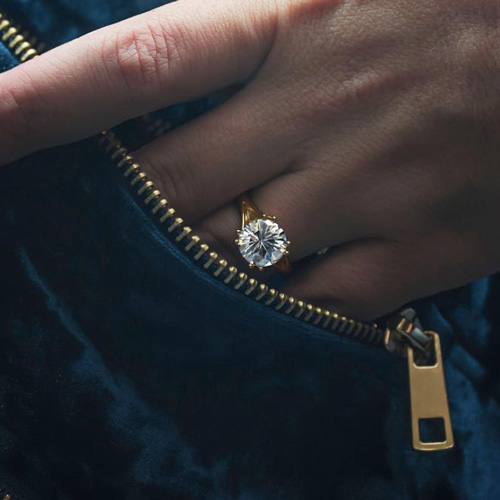
A solitaire engagement ring is defined by one feature: a single center gemstone set on a plain band without side stones or accent diamonds. The simplicity puts the entire spotlight on the center stone, often a diamond, and allows its cut, clarity and brilliance to take center stage.
The solitaire style rose to prominence in the late 19th century when Tiffany & Co. introduced its six-prong setting in 1886. That design lifted the diamond above the band, allowing light to hit the stone from all angles. Today, the solitaire remains the most iconic engagement ring setting and is celebrated by jewelers and couples around the world.
What Is a Solitaire Engagement Ring?
It’s important to note that “solitaire” refers to the overall style, not the setting itself. The solitaire look can be created with a prong setting, bezel setting or cathedral design. What unites them all is the single diamond at the center. This one-stone symbolism has made solitaire rings a universal choice for proposals. The concept even extends to other jewelry, including diamond solitaire pendants and solitaire stud earrings.
Pros & Cons of Choosing a Solitaire
The solitaire engagement ring has long been considered the most versatile option for pairing with wedding bands. This diamond engagement ring has clean lines that make it easy to stack with classic, curved or even ornate band styles without looking crowded. According to The Knot’s 2024 Jewelry and Engagement Study, the solitaire setting remains the number one classic choice for couples.
There are clear advantages. A solitaire directs most of the budget toward the diamond itself, ensuring quality in the center stone. The ring is timeless, easier to clean than styles with accent stones and adaptable to a wide range of wedding band designs.
Potential drawbacks exist as well. Because the stone is exposed, a solitaire diamond may show dirt more easily than a halo or pavé ring. Security also depends heavily on the integrity of the prongs or bezel, so regular maintenance is essential. And for some, the simplicity may feel “too plain,” though that can be addressed later with add-ons like a hidden halo or an ornate wedding band.
Key Design Decisions for a Solitaire Ring
When choosing a solitaire engagement ring, setting style is one of the most important decisions. Prong settings, like the original Tiffany design, allow maximum light and sparkle but require careful maintenance. A bezel setting encircles the stone in metal, offering more protection for active lifestyles but reducing some brilliance. Cathedral settings raise the diamond with arches of metal, creating elegance with added height.
Diamond shape also plays a defining role. Round diamonds remain the most popular, representing about 28 percent of all engagement ring stones according to The Knot . Other solitaire rings feature oval, cushion, emerald or pear cuts, each bringing a different personality to the design.
Metal choice matters as well. Platinum is prized for its durability while yellow gold and rose gold offer warmth and vintage appeal. White gold delivers a clean, modern look. Band profiles—from knife-edge to comfort-fit—affect how the ring feels and how the center stone is showcased.
When paired with a wedding band, solitaires are flexible. Many brides choose a simple matching wedding ring while others select a contoured or diamond-studded band to add contrast.
Budget & Value: Where Your Money Goes
In a solitaire engagement ring, most of the investment goes toward the diamond itself. The 4Cs—cut, color, clarity and carat weight—play an outsized role compared to rings with side stones. The Gemological Institute of America (GIA) recommends prioritizing cut first, as an excellent cut can allow couples to drop slightly in clarity without sacrificing beauty.
In the Bay Area, couples typically spend between $5,000 and $9,000 on an engagement ring according to The Knot. That range can vary based on diamond size, metal choice and whether the stone is lab-grown or mined.
Policies also matter. Many jewelers, including La Bijouterie, offer financing and trade-up options for future upgrades. Buyers should also factor in San Francisco sales tax and jewelry insurance. Because a solitaire diamond ring places so much value in a single stone, insuring the piece is essential.
Solitaire vs. Halo, Three-Stone & Pavé
One of the most common questions is how solitaires compare to other settings. A halo ring can make a center stone appear up to half a carat larger. Pavé bands add sparkle along the shank, catching light with every movement, while three-stone rings carry deeper meaning, symbolizing the past, present and future of a couple’s journey together.
Maintenance differs as well. Halo and pavé rings have more prongs, which means more cleaning and checking. Solitaires are easier to keep spotless but place more responsibility on prong integrity.
Resale value and heirloom potential also differ. Solitaires are often seen as timeless and classic, making them easier to pass down or reset in the future. For brides who prefer minimalist elegance, a solitaire diamond ring often feels like the perfect engagement ring.
How to Choose Your Perfect Solitaire
Lifestyle is the first consideration. Prong solitaires provide unmatched brilliance but may snag on clothing or gloves. A bezel solitaire offers security for active lifestyles. Cathedral settings provide elegance but may sit higher on the hand.
Timeline is another factor. A custom solitaire engagement ring often takes four to six weeks to produce while ready-made options may be available in two weeks. La Bijouterie provides computer-aided design (CAD) previews to ensure couples see the design before it is crafted.
Third-party grading, such as GIA or American Gem Society (AGS) certificates, guarantees diamond quality. Couples should agree on a budget ceiling before shopping and bring inspiration photos to design sessions. Sustainable choices, like recycled gold or lab-grown diamonds, are increasingly popular. Colored gemstone solitaires—sapphire or moissanite, for example—are also growing in popularity.
Care & Maintenance Tips
To keep a solitaire ring secure, prongs should be checked every six to twelve months by a professional jeweler. This ensures the diamond remains firmly in place. At home, couples can clean their diamond ring using warm water and mild soap, avoiding harsh chemicals.
Professional ultrasonic cleaning provides a deeper polish and may be required by insurance providers who often mandate annual inspections. Travelers sometimes choose a simpler “travel ring” to avoid risking their solitaire diamond abroad. Resizing is possible but should always be handled by a professional jeweler to protect the setting.
Current Solitaire Trends & Celebrity Inspiration
Celebrity influence continues to drive solitaire popularity. Stars like Anne Hathaway and Beyoncé have been seen wearing solitaire diamond rings, reinforcing their timeless appeal.
Lab-grown solitaire diamonds are gaining significant share, offering sustainability and value. TikTok trends highlight oval and elongated cushion shapes while mixing metals has become fashionable too—such as pairing a white gold solitaire with yellow gold wedding bands.
Shape trends for 2025 point to oval and elongated cuts as reported by Boston 25 News . Hidden halos and gallery accents add subtle detail without detracting from the solitaire’s simplicity.
Why Couples Choose La Bijouterie for a Custom Solitaire
For couples in San Francisco, La Bijouterie offers a unique approach to buying a solitaire engagement ring. As a third-generation jeweler, the family-owned business blends expertise with a welcoming warmth and hospitality, even serving espresso during design consultations.
Ethically sourced diamonds, transparent pricing and one-on-one design sessions simplify what can be an overwhelming process. Couples receive CAD renderings before production along with lifetime care packages that include free resizing and polishing. Local service and trusted guidance make La Bijouterie a destination for designing a solitaire diamond ring that reflects your style and becomes a timeless piece you’ll cherish every day.
FAQ: First-Time Buyer Quick Answers
What is a solitaire vs. a single-prong setting?
A solitaire refers to the style of one center stone while a single prong describes a type of setting. Most solitaire rings use multiple prongs or a bezel for security.
Is a bezel solitaire less sparkly than prongs?
Yes, a bezel setting may block some light, but it offers more protection. The choice depends on lifestyle vs. style priorities.
How much should I spend on a solitaire ring?
There’s no set rule. The Knot reports average spending of $5,000–$9,000 in the Bay Area. The key is balancing budget with diamond quality.
Can I add a halo later if I choose a solitaire now?
Yes, many solitaires can be reset into a halo design later. This is a popular upgrade path.
Are lab-grown solitaire diamonds as durable?
Yes, lab-grown diamonds are chemically identical to mined diamonds. They offer the same durability and sparkle.
Next Steps: Book a Consultation & Start Designing
The journey to the perfect engagement ring begins with a conversation. Gather your preferred diamond shapes, finger size, inspiration photos and proposal date. Then meet with La Bijouterie’s team to bring your solitaire vision to life.
Create a custom solitaire ring today and experience the difference of working with a San Francisco jeweler dedicated to craftsmanship, ethics and personal service.