Engagement Ring Shopping Tips
Buying an engagement ring is exciting. And it can become overwhelming faster than people expect. Information overload sets in quickly: diamonds, settings, metals and budgets. For many people, this is their first time buying fine jewelry, which can make the process feel daunting.
This guide breaks down engagement ring shopping tips into clear, practical steps. You’ll get straightforward advice you can actually use, so engagement ring shopping, even in the early stages, feels manageable instead of stressful.
How to Set an Engagement Ring Budget You’ll Actually Feel Good About
The first step in engagement ring shopping is setting a dollar number that fits your life. It should not be a rule you feel pressured to follow. You’ve probably heard the “two months’ salary” suggestion. That didn’t come from financial advice or relationship guidance. It came from a De Beers campaign designed to normalize higher spending.
A realistic budget today, however, looks different for everyone. This is not just any purchase. It is something your partner will wear every day, which is why getting this part right is more important than following some outdated rule.
A diamond engagement ring follows a general budget breakdown. Around 60-70% goes toward the center stone.
The rest covers:
- Setting
- Metal such as yellow gold, white gold or platinum
- Any custom design work
What’s more important than the budget itself is understanding what that expense actually gets you. Some shoppers start with the belief that stone size should be the priority, but that mindset often changes once they see how much the cut and setting influence a ring's overall look.
Most engagement rings today cost somewhere between $3,000 and $10,000, though there is no universal rule that defines how much you should spend. Some buyers prioritize a large center stone. Others focus on craftsmanship, metal choice or a custom design. Putting these trade-offs side by side tends to make the decision much clearer.
At La Bijouterie, consultations start with a clear breakdown of budget versus outcome. Every option is explained in terms of how it will actually look and wear, so buyers can make a decision without guessing. You should be able to clearly see the trade-offs. Size, quality and setting should all be understood before you commit to anything.
Financing can also change the picture. Many jewelers offer payment plans, which can broaden your options and give you better design choices.
If you want a deeper breakdown, this guide on engagement ring shopping tips is a great place to start.
The 4 Cs of Diamonds: What Every Buyer Needs to Know Before Walking Into a Store
One thing that becomes clear once you start comparing options side by side is how small details can change the entire look of a ring. Two stones with similar specs can feel completely different once they are set and viewed in real lighting. This is why experienced buyers spend time looking at actual combinations rather than relying solely on certificates or measurements.
The interaction between the center stone, the setting and even the bandwidth all influence how the ring actually looks on the hand. A slightly thinner band can make a diamond appear larger, while a properly proportioned setting can improve balance and comfort. These details are easy to overlook at first, but they often make the difference between a ring that looks good in theory and one that feels right from the first moment it’s put on.
Choosing your perfect diamond begins with understanding the 4Cs:
- Cut
- Color
- Clarity
- Carat
If you only focus on one, make it the cut.
Cut is the one factor you should not compromise on. It controls how light moves through the diamond. That’s what gives it brightness and life.
A smaller quality-cut stone will consistently outperform a larger one with poor cut quality. This is where many buyers shift their priorities once they see the diamonds in person. The difference in sparkle is immediately noticeable.
Two diamonds with the same carat weight can look completely different depending on the cut. One might appear bright and sharp, while the other looks dull or flat. The Gemological Institute of America (GIA) explains this clearly.
Here’s how most buyers approach the 4 Cs once they understand the trade-offs.
- Cut – First priority, no exceptions
- Color – G to H usually looks colorless once set
- Clarity – VS1 to VS2 appears clean to the naked eye
- Carat – Weight is important, but not as much as people think
Do you need a GIA report? Yes, if you want to verify quality independently. A GIA grading report gives you an unbiased, third-party evaluation of the diamond. You can verify any report on the GIA Report Check. Without that report, you’re relying entirely on the seller’s word.
Diamond Shapes Decoded: Finding the Silhouette That Fits Her Style and Hand
Shape changes everything (more than most people realize). Choosing the right diamond shape is one of the most personal decisions in the entire process. The diamond shape you choose will influence how large the stone appears, how it reflects light and how it complements the wearer’s hand.
The round brilliant is still the most popular option. It's known for maximum sparkle and consistency. It’s also priced as a premium. Other shapes offer a different look and are sometimes a better value.
You’ll see options like:
- Oval, which is elongated and often appears larger
- Cushion, which has soft edges and a slightly vintage feel
- Emerald, which has clean lines and a more understated look
- Princess, which has sharp, modern edges
- Pear, which has a teardrop shape
- Marquise, which is long and has pointed ends
- Heart, which is a pear-shaped variation with a cleft
Different stones can look dramatically different depending on shape and proportions, even at the same carat weight. Oval diamonds, for example, tend to look larger than round diamonds of the same carat weight. This comes from how they spread across the finger.
Hand shape also plays a role. Elongated shapes like oval, marquise and emerald can make fingers appear longer and more slender. Round and cushion shapes tend to feel more balanced.
During consultations, many buyers are surprised by how different shapes feel once they’re actually on the hand. The ring that looks best on paper is not always the one that feels right once it is worn.
The shape should look like something they would choose naturally, not something that simply looks impressive in a display case. Exploring engagement ring styles helps put visuals to each shape.
Ring Settings and Styles: How to Choose the Look That Lasts Decades
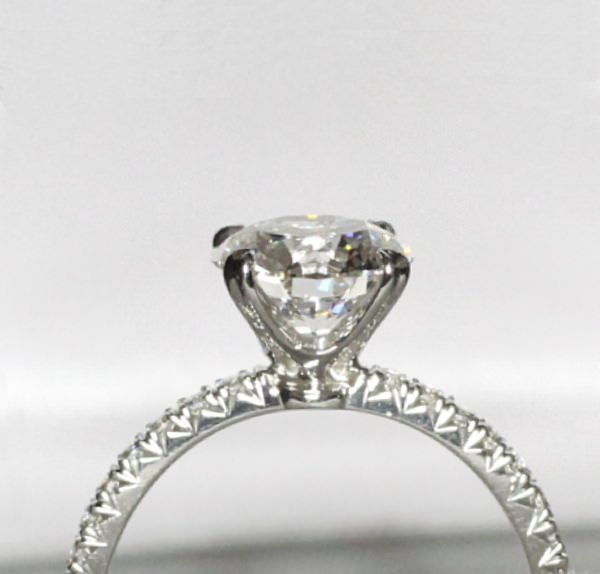
The setting affects more than appearance. It influences how the ring feels, how secure the diamond is and how it holds up over time. The most common choice is still the solitaire. It features one center stone and minimal structure. It works because it is flexible. It pairs easily with almost any style and any wedding band.
Other common settings include:
- Halo, which adds visual size with smaller surrounding diamonds
- Three-stone, which feels balanced and often symbolic
- Pavé, which includes small diamonds in the band
Every setting comes with trade-offs. The halo setting can make a diamond look larger. That is exactly why some people prefer them. They also require more upkeep over time. Solitaire settings are simpler. Fewer small stones mean fewer long-term issues. They also pair more easily with a wedding band.
Buyers often initially focus on appearance, then shift toward practicality once they understand long-term wear. The best setting is the one that still works five years from now, not just the one that stands out in a showroom.
Gold, White Gold or Platinum? What Every Buyer Should Know About Ring Metals
Metal choice affects how the ring looks on day one and how it holds up years later.
Here’s how the main options compare.
Yellow Gold
- Warm, classic tone
- Easy to maintain
- Works well with many skin tones
White Gold
- Bright, modern look
- Needs rhodium plating every few years
- More budget friendly than platinum
Platinum
- Extremely durable
- Naturally white, so no plating is needed
- Higher upfront cost
14k vs. 18k gold
- 14k is more durable and better for daily wear
- 18k has a richer color but is slightly softer
Most buyers choose based on lifestyle once they understand the differences. Someone with an active routine often prefers durability over subtle color variation.
How to Vet a Jeweler: Certifications, Red Flags and Questions Worth Asking
Where you buy a ring can dramatically influence your decision-making and satisfaction with your choice. A good jeweler will slow the process down and explain each step clearly. You should feel informed, not rushed.
What to look for:
- GIA-certified diamonds
- Clear return and warranty policies
- Direct, transparent answers
Red flags to watch for:
- Pressure to decide quickly
- No grading report available
- Vague answers about sourcing
- “Today-only” discounts that never really expire
A few questions worth asking:
- Can I see the GIA report?
- Where is this diamond sourced from?
- What does your warranty include?
- Do you offer resizing?
Any reputable jeweler should be willing to show documentation and answer these questions clearly.
At La Bijouterie, every center stone is GIA certified, and every design is built with long-term wear in mind. The process begins with education first, so buyers understand exactly what they are choosing. If you’re early in your search, browsing a trusted ring collection can help you start spotting quality differences more easily.
Lab-Grown vs. Natural Diamonds: What Every Buyer Should Understand Before Deciding
Lab-grown and natural diamonds are both real. They share the same material, hardness and appearance.
A lab grown diamond has the same makeup as a natural diamond. The difference comes down to origin. Lab diamonds are created in controlled environments. Natural diamonds form over long periods of time underground.
Here’s how they compare:
- Price – Lab diamonds are more affordable
- Resale Value – Natural diamonds tend to hold their value better
- Availability – Lab diamond availability is increasing rapidly
Some buyers are drawn to lab diamonds because they can get a larger stone for the same budget. Others prefer natural diamonds because of their rarity and long-term value. Understanding both perspectives tends to make the decision more grounded and less influenced by marketing.
Environmental impact is more complex than it’s often presented. Both options require energy, and the details depend on how each diamond is produced or sourced. Ultimately, the decision comes down to what is most important to you. Cost, origin and long-term value all play a role.
This information is intended as general guidance. Pricing, availability and diamond characteristics can vary by retailer and market conditions.
The Details First-Time Buyers Miss: Ring Size, Timeliness, Stacking and Insurance
Some of the most important details are the easiest to overlook. These details often come up late in the process, which is why they are easy to miss. Planning for them early makes everything go more smoothly.
Ring Size:
- Borrow a ring your partner already wears to get the right size
- Ask a close friend or family member to help you
- Discreetly trace an existing ring
Timeline:
- Custom rings usually take six to eight weeks
- Starting at least 10 weeks before your proposal gives you room to adjust
Wedding Band Compatibility:
- Some settings don’t sit flush with a band
- It’s worth asking about this early
Insurance:
- Typically costs 1-2% of the ring’s value per year
- Covers loss, theft and damage
Make the Right Choice Once and Feel Good About It Forever
The process feels overwhelming at first, but clarity emerges once you understand what’s important. Most people do not remember every detail of the buying process. What they remember is how confident they felt when they made the decision.
The goal is to find the perfect ring for your partner. It should feel right for them, not just impressive on paper. The best ring is the one that still feels right years after the proposal.
Focus on a few core things:
- A high-quality cut diamond over a larger one
- A setting that fits daily life
- A budget that feels comfortable
- A jeweler you can trust
If you’re ready to take the next step, start with a conversation. At La Bijouterie, the process is built around clarity, not pressure. You’ll see how different diamonds, settings and budgets come together, so you can make a decision that feels right from the start. The goal is simple. Help you choose a ring you won’t second-guess later.
Book an appointment today with La Bijouterie or visit the San Francisco location at your convenience.